Ad Potential Score
Last updated: September 23, 2026
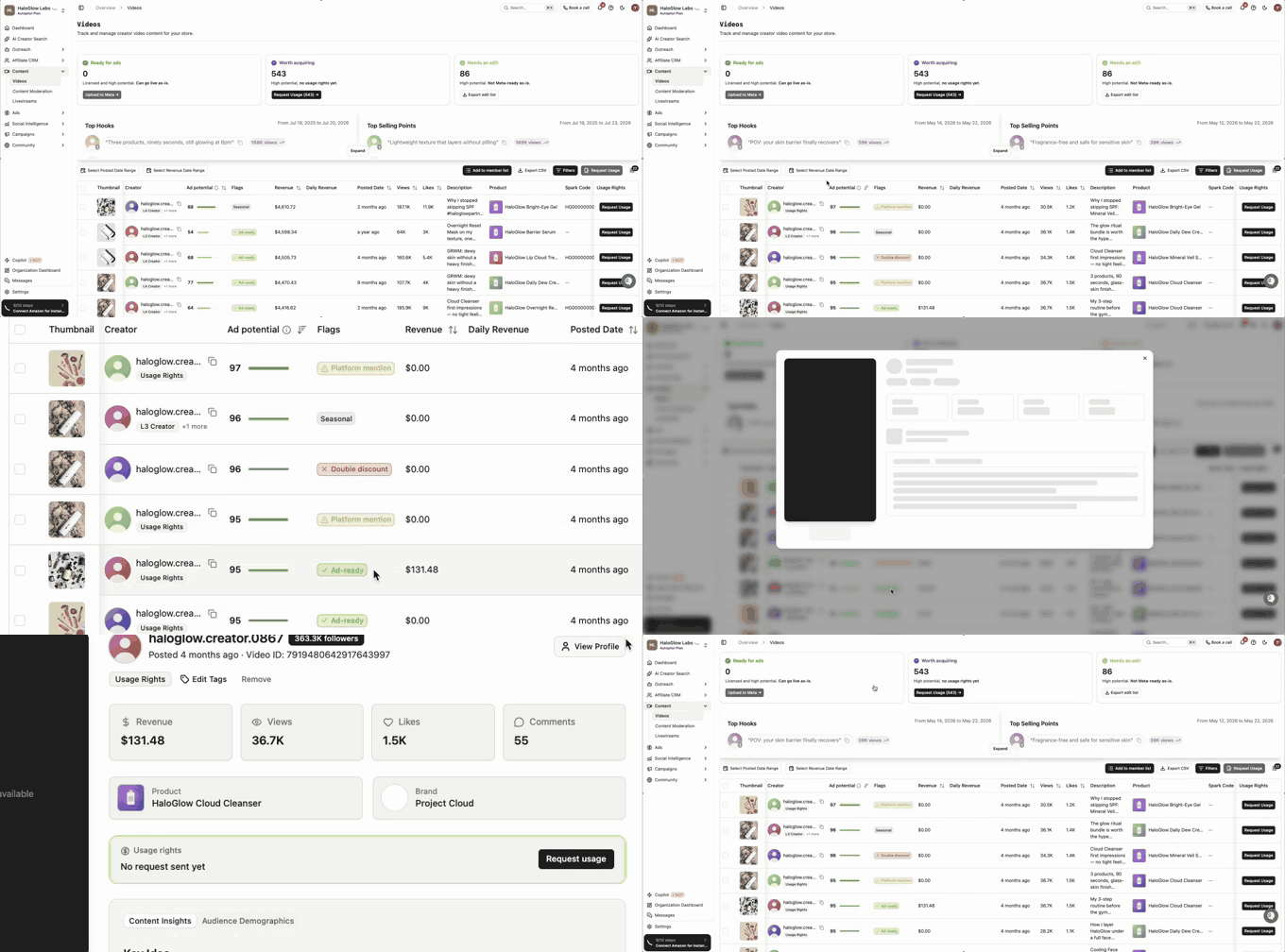
What it is
Every creator video in a brand's library gets analyzed and scored automatically. The output has four parts:
Four subscores covering how the video is made
Flags for things that will cause a problem, particularly if the video is reused as a paid ad
Quality tags describing what is present in the video, good and bad
Descriptive labels for format, pace and creative devices used
The point is to answer one question you cannot answer by scrolling: out of thousands of videos, which ones are worth spending money behind?
Where it lives
The Videos page. Scores appear as a column, with filters for score range and for including or excluding flags.
The four subscores
Each is 0 to 100. Averages in brackets.
Subscore | What it measures |
|---|---|
Presence | How well the creator holds attention on camera |
Storytelling | Whether the video makes a coherent case for the product |
Craft | Production quality: lighting, audio, framing, stability |
Pacing | Whether the video moves at a rate that holds a viewer |
Craft and pacing run highest, storytelling and presence lowest.
Flags
Flags mark a specific problem. Four exist today.
Flag | What it catches |
|---|---|
Display only | Product appears but is never actually used or demonstrated |
Platform mention | Video names TikTok or refers to on-platform mechanics |
Double discount | Video quotes a discount or price that only exists on TikTok Shop |
Slideshow or stock | Assembled from stills or stock rather than filmed |
Platform mention and double discount are the paid-media flags. A video that says "link in my TikTok Shop" or "use the 20% off code on the app" does not translate to Meta.
Around 29% of scored videos carry at least one of these two, so roughly three in ten of a typical library needs an edit before it can run as an ad.
Quality tags
Tags describe what is in the video. They are not pass or fail, they are attributes a brand can filter on.
Positive signals, most common first: face on camera (78% of videos), product actually used (58%), strong hook (57%), clear call to action (42%), product link mentioned (34%), price callout (23%).
Problems worth surfacing: shaky camera (18%), poor lighting (14%), poor audio (13%), poor fit (8%), seasonal reference (7%), wrinkled product (2%), watermark (under 1%).
Seasonal reference is quietly useful for paid media, since a video referencing a holiday has a shelf life and should not go into an evergreen ad set.
Descriptive labels
Not scores, just description. Useful for spotting which formats work for a given brand.
Format. Review dominates at 48% of all videos, then problem-solution at 25%. Everything else is small: testimonial, tutorial, unboxing, before-after, routine, comparison, skit.
Pace. Moderate 86%, slow 13%, fast under 2%.
Creative devices. Text overlay 78%, talking head 68%, b-roll 39%, burned-in captions 34%, voiceover 17%, music-driven 16%. Split screen, green screen and stitch or duet are all marginal.
How to use it
Filter to videos with no flags. That is the ready-to-run pool.
Sort by score and take the top handful, not the whole list.
Check the format spread of what you picked. Three reviews is one hypothesis tested three times, not three tests.
Handle the flagged videos separately. Platform mention and double discount usually need a trim rather than a rewrite, and the video is often still worth it.
Re-run the filter monthly as new content comes in.